SONY C-70CDX2D Cdix Blank Audio Cassette 70MIN Cassette. 1996.
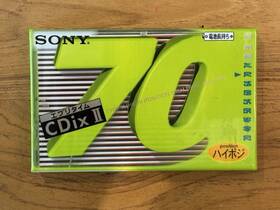
( Brand: Sony ), ( Manufacturer Part Number: C-70CDX2D ), ( Type: Cassette Tape ), ( Capacity: 70 Min ), ( Features: Long-run Storage, Recordable ), ( Type Ii: High Position ), ( Year Manufactured: 1996 ), ( Country Of Origin: Japan )
Review SONY Cdix Type 70min Blank Audio Cassette. Japan 1996. New Sealed
The Sony C-70CDX2D CDX 70-minute Blank Audio Cassette, manufactured in 1996, is a high-quality blank tape designed for use in standard cassette players. This cassette offers a generous recording time of 70 minutes, providing ample space for recording extended songs, mixtapes, or even full albums.
The tape is made with Sony's advanced Chromium Dioxide coating, ensuring excellent sound quality with minimal distortion and improved durability. The coating allows for a wider frequency response, resulting in clearer and more detailed sound reproduction. Additionally, the tape's high-tensile base material enhances the tape's durability and resistance to wear and tear.
The C-70CDX2D cassette is compatible with a broad range of cassette players, making it a versatile choice for music enthusiasts. Its oxide coating is formulated to provide excellent signal-to-noise ratio, which means that recorded sound will be clearer and free from unwanted background noise.
The cassette's compact size and standard dimensions make it easy to store and transport. Each box contains 100 blank cassettes, making it an affordable and convenient option for those who require a large quantity of blank tapes.
In summary, the Sony C-70CDX2D CDX 70-minute Blank Audio Cassette is a top-tier blank tape option for anyone in search of high-quality sound reproduction, durability, and a generous recording capacity. With its advanced Chromium Dioxide coating, excellent signal-to-noise ratio, and compatibility with a wide range of cassette players, this blank tape is an excellent choice for music lovers, archivists, and anyone looking to preserve their favorite audio recordings.
Pros and Cons of Buying Sony C-70CDX2D CD-IX 70min Blank Audio Cassette (1996)
I. IntroductionSony C-70CDX2D CD-IX 70min Blank Audio Cassettes, manufactured in 1996, are still available in the market. This article provides an unbiased analysis of the pros and cons of purchasing these cassettes based on their features, performance, and potential benefits.
II. Pros1. High-Quality Sound: Sony is known for its high-quality audio products. These cassettes offer good sound quality, making them suitable for recording music, voice memos, or other audio content.
2. Long Recording Time: With a capacity of 70 minutes, these cassettes provide ample recording time for extended sessions.
3. Durability: Sony cassettes are known for their durability. The C-70CDX2D model is no exception, with a sturdy design that can withstand regular use.
4. Availability: These cassettes are still available in the market, making them a suitable choice for those who prefer using traditional audio recording media.
III. Cons1. Analog Technology: The Sony C-70CDX2D cassette is an analog recording medium. This means that the recorded audio may degrade over time due to factors like oxide decay and tape wear.
2. Limited Compatibility: These cassettes may not be compatible with all audio players, particularly those designed for digital media.
3. Potential for Distortion: The extended recording time on a single cassette may result in some distortion, especially when recording at high volumes or with complex audio content.
4. Limited Capacity compared to Digital Media: Compared to digital media, such as CDs or MP3 files, these cassettes offer limited storage capacity.
IV. ConclusionThe Sony C-70CDX2D CD-IX 70min Blank Audio Cassette (1996) offers several advantages, such as high-quality sound, long recording time, and durability. However, it also comes with some disadvantages, such as the use of analog technology, limited compatibility, potential for distortion, and limited capacity compared to digital media.
V. RecommendationIf you are looking for a traditional audio recording medium with good sound quality and ample recording time, the Sony C-70CDX2D CD-IX 70min Blank Audio Cassette (1996) could be a suitable choice. However, if you prefer digital media or require a larger storage capacity, you may want to consider alternative options such as CDs or digital audio files. Ultimately, the decision depends on your personal preferences, budget, and recording needs.
Details:
part #: c70cdx2d price
- $10.99
specifications audiotapee:
- brand: Sony
- mpn: C-70cdx2d
- type: Cassette Tape
- capacity: 70 Min
- features: Long-run Storage, Recordable
- type ii: High Position
- year manufactured: 1996
- country of origin: Japan
payments audiotapee:
- credit card: Diners-club
- wallet: Google-pay
- other
offer audiotapee:
- started: May 11, 2026
- sold: 0
- best offers: True
- options: Ship-to-home
- availability: In Stock
- quantity: 1
returns audiotapee:
- policy: No Returns
general audiotapee:
- TV, Video Audio Accessories > Blank Audio/Video Media > Audio Tapes
- condition: New
shipping audiotapee:
- class: Economy
- type: Calculated
- transit: 4-10 Days
- service: USPS Media Mail
- cost: $4.47
- carrier: USPS
seller audiotapee:
- # reviews: 558
- rating: 100.0%
- city: Huntington, New York
Sony C-70CDX2D Is Similar To:
- 25.00 Sony High Fidelity Normal Bias Blank Tapes Min New Sealed (43.7% similar) Us buyer allow 1 to 3 weeks for delivery reach your door. Us buyer pays shipping cost Canada free. 16 Sony high fidelity normal bias blank tapes are brand new and sealed. I do combine shipping deals on items 2 or more. The blank tapes are 60 min...(April 9th, 2018)
- 0 2724220728 8 Sony Hf Minute Blank Cassette Tapes Pack (43.6% similar) The tapes are still sealed in original packaging. Will not be marked as package states that the cassettes are made of japan and USA components assembled in Mexico. Shipping is thru so actual cost of item without will show on custom forms. This listing is for a pack of 3 Sony hf 90 minute audio ...(February 8th, 2019)
- 0.4650563317375189 New Sony Microcassette Tapes Pack Min (29.9% similar) Condition: new if a power adapter is required for this item, it not included cord no other accessories hardware software. I'll get back to you as soon I can...(October 4th, 2018)
- 0.8031612196478952 New Sony Microcassette Blank Cassette Tapes Min (37.5% similar) I'll get back to you as soon I can. Condition: new if a power adapter is required for this item, it not included cord no other accessories hardware software...(March 21st, 2018)
- 00001 Sony Basf Maxell Fuji Lot Blank Audio Cassette Tapes Lh (51.8% similar) All six are brand new and sealed. The six you see is what will receive...(February 8th, 2019)
- 020356506742 Sony Lot Of Hf Minute Tdk Blank Audio (34.4% similar) Lot of 9 Sony high fidelity 90 minute blank cassette tapes - 8 individual TD 60 audio 1 package 3 brand new in original shrink wrap packaging...(October 11th, 2018)
- 025215149030 Sony Lot 3 New (22.9% similar) Maxwell capsule ud ii 50. Brand new never opened. Shrink wrap has some wear...(June 28th, 2017)
- 027242004221 Sony 2-pack Ucx-60 Blank (26.1% similar) New and factory sealed...(June 17th, 2017)
- 02724220008 Sony Hf60 Blank Cassette (36.8% similar) Nip older stock though. Please see all pictures any questions ask thanks...(December 18th, 2017)
- 027242200685 Sony Hf-s 90 Cassette (30.4% similar) 4 four individually packaged in set of two Sony hf-s 90MIN cassette tapes...(September 5th, 2017)
- 027242200821 Sony Lot 2 New (22.9% similar) Vintage pack of 2 Sony high bias type ii CRO2 ix-es 90 minute audio cassette tapes minutes 45 each side best for high-end hi-fie systems rated 2ND tape by magazine dynamics, pure reproduction this is a new still factory sealed old stock item...(June 29th, 2017)